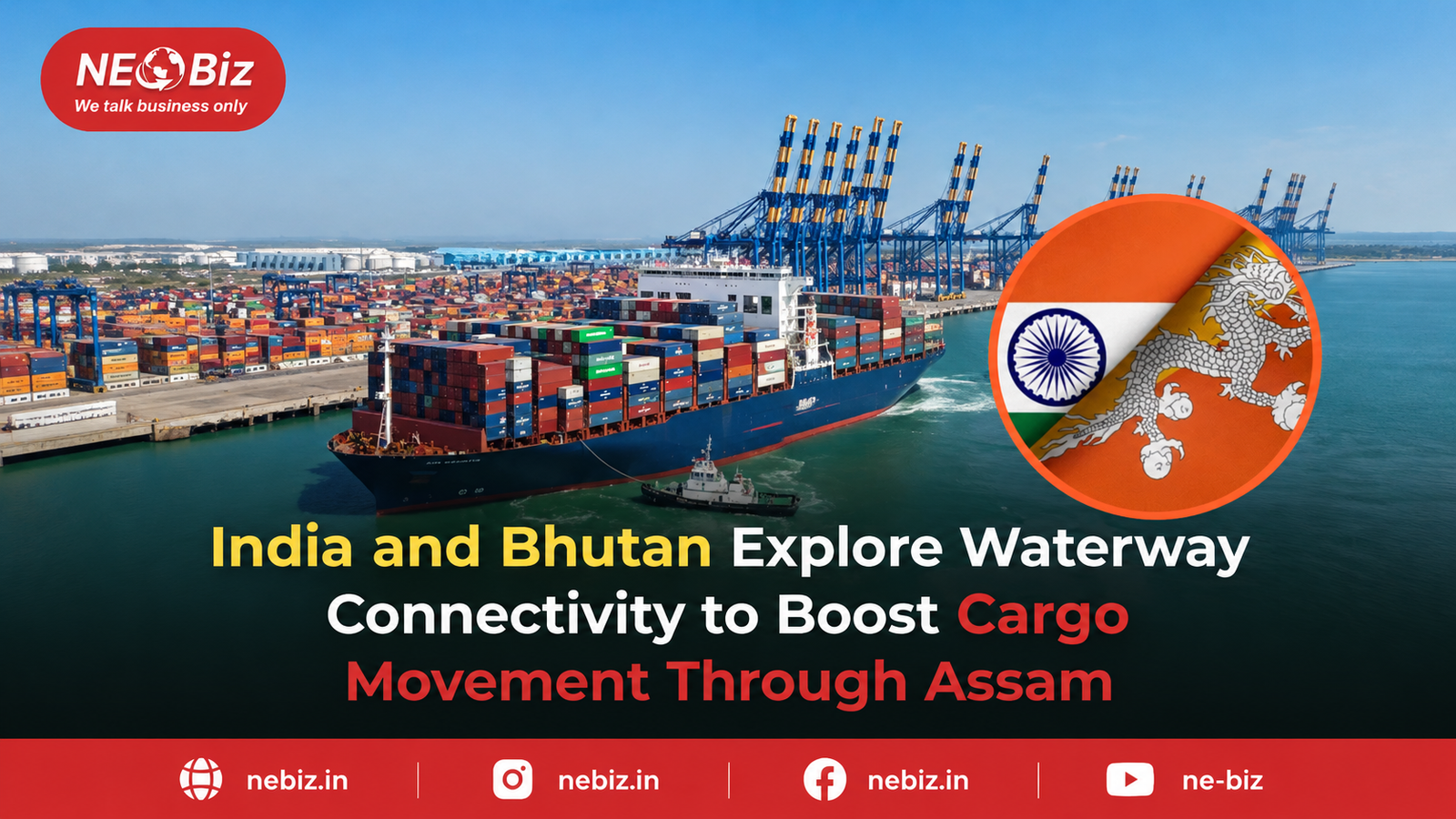
India and Bhutan are exploring opportunities to strengthen cross-border trade by improving access to India's inland waterways, with Assam emerging as a potential gateway for more efficient cargo transportation. The discussions focus on enhancing connectivity between Bhutan and India's national waterway network, which could provide the landlocked Himalayan nation with improved access to domestic markets, ports and international trade routes.
Union Minister for Ports, Shipping and Waterways Sarbananda Sonowal recently held a bilateral meeting with Bhutan's Infrastructure and Transport Minister Lyonpo Chandra Bahadur Gurung to discuss ways to expand transport connectivity and facilitate cargo movement. During the discussions, the two sides highlighted the importance of National Waterway-2, which runs along the Brahmaputra River, and the Jogighopa terminal in Assam as key components of a potential trade corridor.
The Brahmaputra River is an important transport route for Northeast India, connecting several areas through an extensive inland waterway system. Greater utilisation of this network could provide an additional option for moving goods across the region, complementing road and rail transportation. For businesses, access to multiple transport modes can improve supply-chain flexibility and provide alternatives when existing routes face capacity constraints or higher logistics costs.
The proposed focus on waterway connectivity is particularly relevant for Bhutan because of its landlocked geography. The country relies on neighbouring nations for access to seaports and international shipping routes. Improved links with India's transport infrastructure could help Bhutanese businesses move goods more efficiently, expand commercial opportunities and strengthen connections with regional and global markets.
Assam's strategic location makes it an important link in these discussions. The state shares international borders with Bhutan and Bangladesh and serves as a major commercial centre for Northeast India. Strengthening cargo infrastructure along the Brahmaputra could improve the movement of goods between Assam, other Northeastern states and neighbouring countries. It could also create opportunities for logistics providers, freight operators, warehousing businesses and enterprises involved in cross-border trade.
Jogighopa is an important part of the region's developing multimodal logistics network. The terminal is intended to support cargo handling and improve connections between inland waterways and other forms of transportation. Better integration of river transport with road and rail networks could help businesses move goods from production centres to distribution hubs more efficiently. For exporters and importers, such connectivity can be an important factor in determining delivery schedules, transportation expenses and access to new markets.
Inland waterways can offer certain advantages for transporting suitable types of cargo, particularly bulk commodities and large consignments. Compared with road transport, water-based freight movement can reduce the number of vehicles required for certain shipments and potentially lower transportation costs and fuel consumption per unit of cargo. However, the commercial viability of any route depends on factors such as navigability, seasonal water levels, terminal facilities, cargo volumes and the availability of reliable onward transportation.
For Bhutanese businesses, stronger access to India's waterways could provide another option for transporting goods through Assam. The benefits would depend on the development of suitable logistics arrangements, efficient customs procedures, cargo-handling facilities and coordination between transport authorities on both sides. Consistent transit arrangements and predictable delivery schedules would be important for businesses seeking to incorporate the route into their supply chains.
The discussions also reflect the wider importance of regional economic cooperation between India and Bhutan. The two countries share longstanding trade and infrastructure ties, and improved transport links could support commercial exchanges while strengthening connectivity across the eastern Himalayan region. Better logistics infrastructure can help businesses access larger markets, source raw materials more efficiently and develop new trading relationships.
At the same time, expanding inland waterway trade requires careful planning. Infrastructure investment, environmental safeguards, river management and coordination among relevant agencies will be essential to ensure that increased cargo movement is sustainable and commercially practical. Seasonal variations in river conditions and the need for efficient transfers between transport modes will also influence the effectiveness of the proposed corridor.
For Assam, stronger waterway connectivity could reinforce the state's role as a logistics and trade hub for Northeast India. Greater cargo movement may create opportunities for local enterprises, transport operators and service providers while supporting the development of multimodal logistics facilities. The wider economic impact will depend on the extent to which businesses can use the infrastructure efficiently and whether improved connectivity translates into lower costs and greater trade volumes.
The discussions between India and Bhutan highlight the potential of the Brahmaputra waterway network and the Jogighopa terminal in strengthening regional cargo connectivity. As both countries explore ways to improve transport links, the effective integration of inland waterways with road and rail networks could become an important consideration in building more efficient trade routes through Assam.