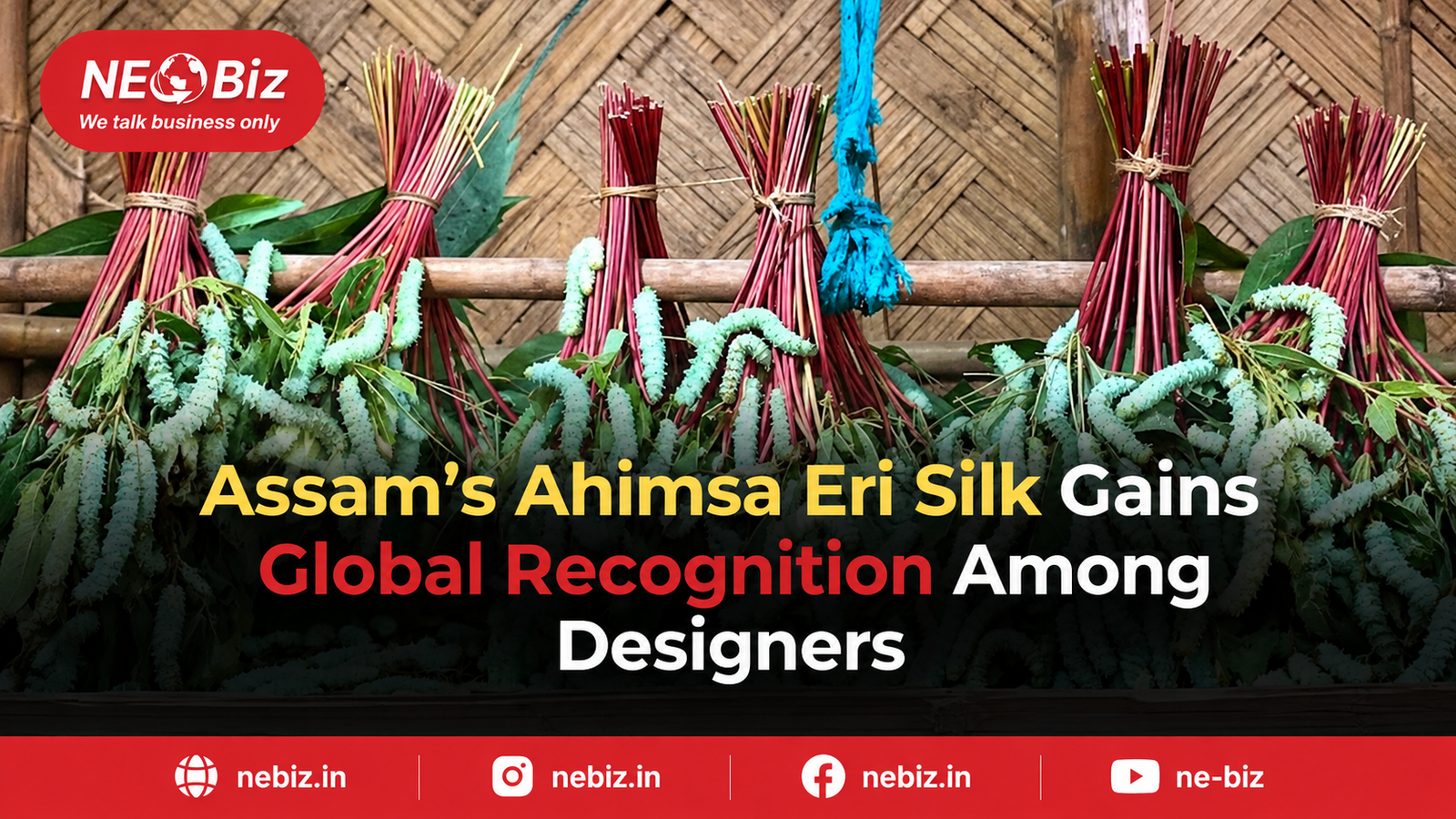
Assam’s traditional Ahimsa Eri silk is attracting growing international attention, with its distinctive texture, natural appearance and non-violent production process drawing interest from designers in countries such as the United States, France and Japan. The indigenous textile, deeply connected to Assam’s cultural heritage and traditional weaving practices, is emerging as a promising product for international fashion and sustainable textile markets.
Eri silk, often associated with ethical and sustainable textile production, is valued for its soft texture, warmth and versatility. Unlike conventional silk production, Ahimsa Eri silk is produced through a process that allows the silkworm to emerge from its cocoon before the fibre is processed. This approach has helped position the fabric as an alternative for designers and consumers interested in cruelty-free materials and more conscious fashion choices.
According to entrepreneur Narmohan Das, the unique appearance and quality of Assam’s handwoven Eri silk have captured the attention of international designers. The fabric’s distinctive pale look and handcrafted character have contributed to its growing appeal beyond domestic markets. Das has reportedly supplied fabric to a French designer, who tested the material several times to assess its quality before expressing satisfaction with the product.
The growing interest in Eri silk highlights the potential of Assam’s traditional textile sector to reach international buyers through specialised products. As fashion brands increasingly explore natural fibres and alternatives to conventional materials, indigenous textiles can offer a combination of craftsmanship, cultural identity and distinctive design. For Assam, this presents an opportunity to connect traditional production techniques with changing global fashion preferences.
The development also draws attention to the role of local entrepreneurs in bringing regional products to wider markets. Businesses that understand both traditional production and contemporary customer expectations can help bridge the gap between artisans and international designers. By developing reliable supply chains, maintaining consistent quality and building relationships with buyers, such enterprises can create new commercial opportunities for locally produced textiles.
Eri silk production is also closely linked to the livelihoods of artisans and weaving communities across Assam. Traditional knowledge, hand-processing techniques and weaving skills remain important parts of the textile's value. Greater demand could create opportunities for skilled workers, small producers and women involved in weaving and related activities. However, the benefits will depend on how effectively producers connect with buyers, manage production and ensure that market growth supports the communities responsible for preserving these skills.
Quality assurance is particularly important when entering international markets. Designers and textile buyers typically assess fabric consistency, durability, texture, colour and suitability for specific garments before placing orders. Repeated product testing, as described by Das, illustrates the importance of meeting buyer expectations and establishing confidence in the material. For local producers, maintaining these standards can help strengthen credibility and encourage long-term commercial relationships.
Digital platforms, exhibitions, designer collaborations and direct business-to-business marketing can further improve the visibility of Assam’s traditional textiles. Online catalogues and social media can help producers showcase the origin, manufacturing process and cultural significance of their products to audiences beyond the region. Partnerships with fashion designers can also introduce Eri silk to new applications, including contemporary clothing, accessories and premium handcrafted collections.
At the same time, expanding the market requires attention to production capacity, pricing, product standardisation and awareness among consumers. Traditional textiles often involve labour-intensive processes, which can influence costs and delivery schedules. Producers must balance the preservation of handcrafted techniques with the practical requirements of commercial orders, while ensuring that artisans receive fair value for their work.
The growing recognition of Ahimsa Eri silk offers an encouraging opportunity for Assam’s handloom and textile industry. By combining traditional craftsmanship with contemporary design, ethical production and effective marketing, the sector can strengthen its presence in domestic and international markets. Continued support for artisans, entrepreneurs and sustainable textile enterprises will be important in translating international interest into lasting economic opportunities.
Assam’s Eri silk story demonstrates how an indigenous product can connect cultural heritage with modern consumer preferences. As designers continue to explore distinctive natural fibres, the textile has the potential to create new pathways for local enterprise, preserve traditional skills and bring greater visibility to the region’s rich weaving traditions.