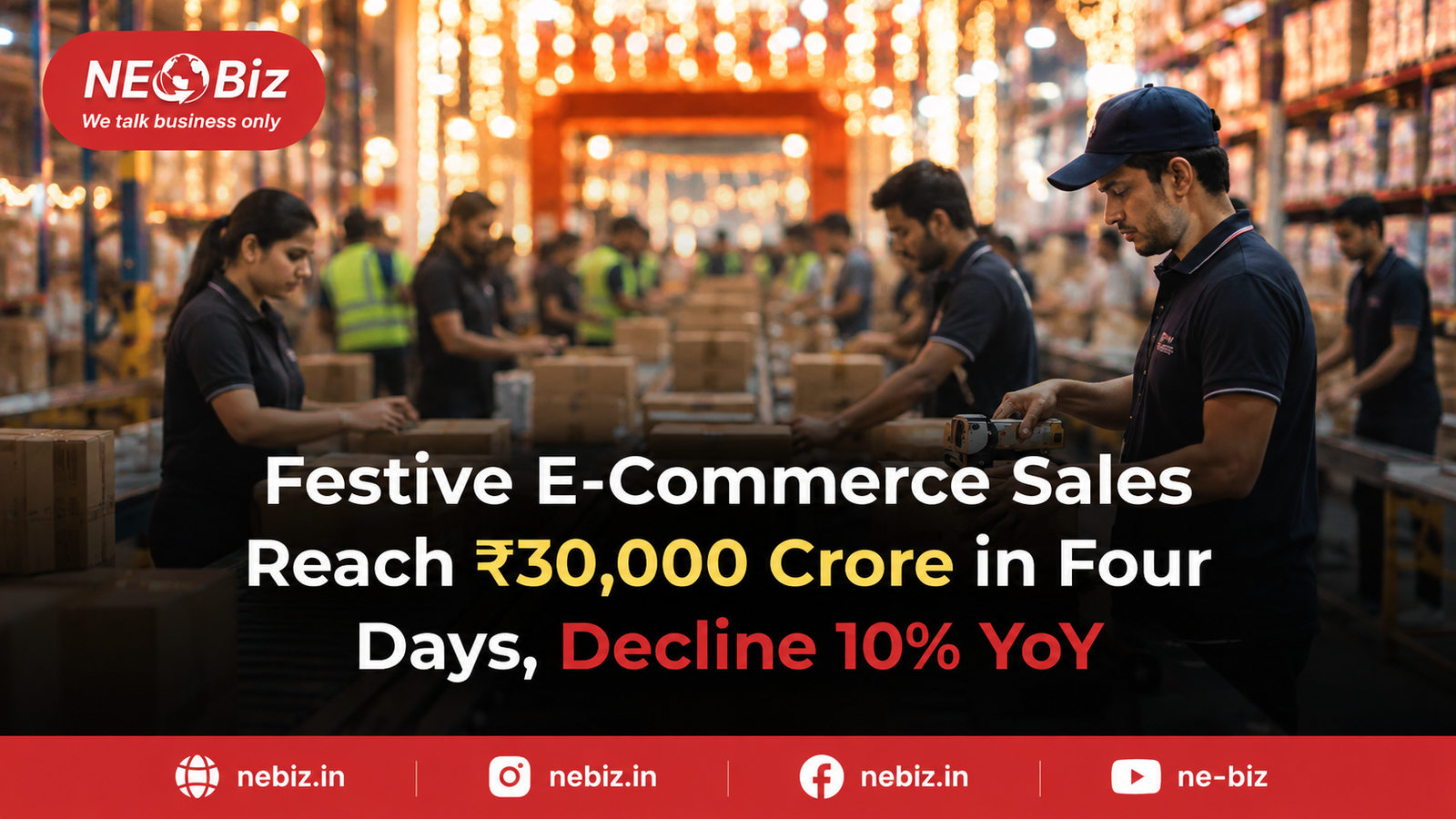
India’s festive e-commerce market recorded sales worth approximately ₹30,000 crore over four days, marking a 10% decline compared with the corresponding period last year. The figures point to changing consumer spending patterns during the festive shopping season, a crucial period for online marketplaces, electronics retailers, fashion brands and other businesses that depend on seasonal demand.
The reported slowdown comes as e-commerce companies compete to attract customers through festive discounts, promotional campaigns, bank offers and faster delivery services. Although festive sales remain a major driver of online retail activity in India, the latest figures indicate that consumer demand has not grown uniformly across product categories. Higher-priced electronics have reportedly weighed on overall sales performance, highlighting the influence of product prices and purchasing decisions on the sector.
Festive shopping traditionally contributes a significant share of annual sales for India's retail industry. Online platforms use this period to attract new customers, increase order volumes and strengthen relationships with existing buyers. Major shopping events also provide brands with an opportunity to clear inventory, introduce new products and expand their reach beyond metropolitan markets. Consequently, changes in festive sales can offer useful insights into consumer confidence and the broader retail environment.
The reported decline in e-commerce sales comes amid evolving purchasing behaviour, with consumers becoming more selective about discretionary spending. Higher-value products such as smartphones, laptops, televisions and other electronic devices often account for a substantial share of festive spending. When customers delay purchases or become more cautious about large expenses, the impact can be reflected in overall sales value, even when demand for everyday products remains relatively stable.
Pricing strategies have become increasingly important for online retailers seeking to maintain sales momentum. Discounts, exchange offers, no-cost instalment plans and credit-card promotions can encourage consumers to make purchases, particularly for expensive products. However, the effectiveness of these incentives depends on household budgets, product affordability and customers' willingness to commit to larger purchases. Retailers must therefore balance attractive offers with profitability and inventory management.
The e-commerce sector is also facing growing competition from offline retailers, which continue to attract customers through in-store demonstrations, personalised service and festive promotions. For electronics in particular, some consumers prefer to compare products physically before making a purchase. As a result, brands increasingly use an omnichannel approach, combining online marketplaces, company websites and physical stores to reach customers across different shopping preferences.
For e-commerce platforms, festive performance has implications beyond immediate revenue. Sales volumes influence logistics operations, warehouse utilisation, delivery networks, seller participation and marketing expenditure. A slower sales period may require businesses to reassess promotional strategies, manage stock levels more carefully and focus on categories where demand remains resilient. Sellers may also need to adjust pricing and inventory decisions to avoid excess stock after the festive season.
The impact extends to small and medium-sized businesses that depend on digital marketplaces to access customers across India. Online platforms can help local brands reach new markets without maintaining a large physical retail presence. However, changes in consumer demand, advertising costs, platform commissions and delivery expenses can affect their margins. During a weaker sales period, businesses may place greater emphasis on customer retention, targeted promotions and efficient fulfilment.
India's digital retail market continues to be shaped by expanding internet access, digital payments, improved logistics and the growing adoption of online shopping in smaller cities. These structural developments provide opportunities for long-term growth, even as individual sales events experience fluctuations. The latest festive figures should therefore be considered alongside broader indicators such as order volumes, average transaction values, repeat purchases and category-wise demand.
Retailers and investors will be watching sales trends through the remainder of the festive season to determine whether the slowdown persists or demand improves closer to major shopping occasions. Performance across electronics, fashion, beauty, home products and everyday essentials will help reveal whether the decline is concentrated in specific categories or reflects a wider change in consumer spending.
The reported ₹30,000 crore in festive e-commerce sales over four days underscores the scale of India's online retail market while highlighting the challenges businesses face in sustaining year-on-year growth. For e-commerce companies, brands and sellers, the immediate priority will be understanding consumer preferences, maintaining competitive pricing and adapting inventory and marketing strategies to changing demand.